
 (217) 546-3333
Dental Bridge vs. Partial Denture: Which Is Right For You?
June 12, 2026
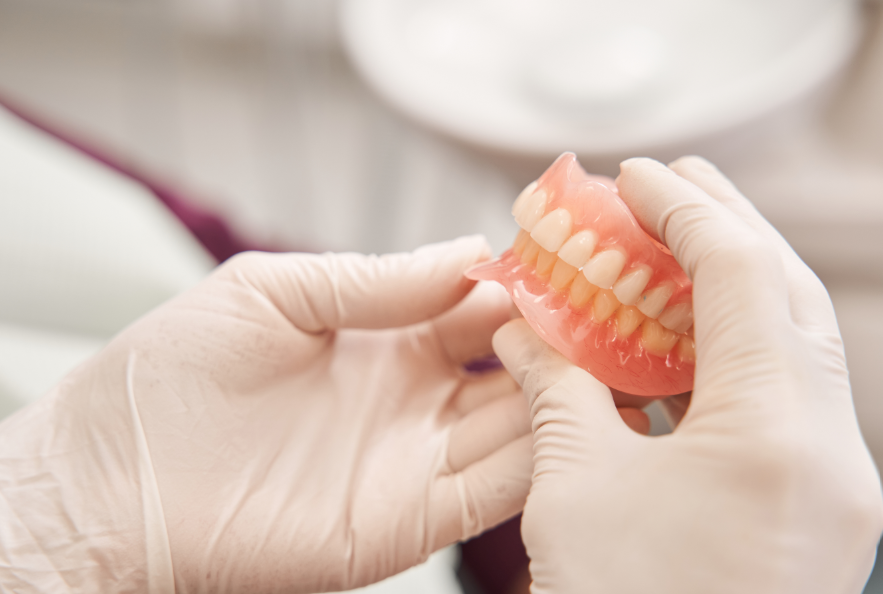
If you’re missing multiple teeth, you’re probably exploring your options for restoring your smile. Two of the most common solutions are dental bridges and partial dentures. Both can improve your ability to chew, speak, and smile confidently again, but they work in different ways and suit different needs.
Understanding the differences can help you feel more confident when discussing treatment with your dentist.
What Is a Dental Bridge?
A dental bridge is a fixed restoration that “bridges” the gap left by one or more missing teeth. It is typically anchored to the natural teeth on either side of the gap, which are prepared and fitted with crowns to support the replacement tooth or teeth in between.
Because bridges are cemented into place, they stay in your mouth permanently and are not removed by the patient. This makes them feel more like natural teeth once you adjust to them.
Bridges are often recommended when the surrounding teeth are strong enough to support the restoration and when patients want a stable, non-removable solution.
What Is a Partial Denture?
A partial denture is a removable appliance designed to replace several missing teeth. It usually consists of replacement teeth attached to a gum-colored base, often supported by a metal or acrylic framework that clasps onto your remaining natural teeth.
Unlike a bridge, a partial denture can be taken out for cleaning and while sleeping, depending on your dentist’s instructions.
Partial dentures are commonly recommended when multiple teeth are missing in different areas of the mouth or when surrounding teeth may not be strong enough to support a fixed bridge.
Key Differences Between Bridges and Partial Dentures
One of the biggest differences between these two options is permanence. Dental bridges are fixed in place, while partial dentures are removable. This affects everything from maintenance to daily comfort.
Bridges tend to feel more stable and natural once placed, since they are anchored to existing teeth. Partial dentures may take some time to get used to, as they can shift slightly during eating or speaking until the wearer adapts.
Maintenance is another important factor. Bridges require careful cleaning underneath the artificial tooth to prevent plaque buildup, often using floss threaders or special tools. Partial dentures, on the other hand, must be removed and cleaned daily to keep both the appliance and surrounding gums healthy.
Cost and candidacy can also play a role. Partial dentures are often more affordable upfront, while bridges may offer longer-term durability depending on oral health and support structure.
Which Option Is Right for You?
The right choice depends on several factors, including how many teeth are missing, the condition of your remaining teeth, your budget, and your long-term oral health goals.
Some patients prioritize stability and a more natural feel, making bridges the preferred option. Others need a more flexible or less invasive solution, making partial dentures a better fit.
Your dentist will evaluate your mouth carefully and help guide you toward the option that best supports both function and aesthetics.
Restoring Your Smile with Confidence
Both dental bridges and partial dentures can significantly improve your quality of life by restoring your smile and making everyday activities like eating and speaking easier. The best choice ultimately comes down to your individual needs and oral health situation.
A professional evaluation is the best way to determine which solution will help you smile with confidence again.
About the Practice
Dr. Driskill and Dr. Neely offer denture care and beyond for the Springfield community. Our team provides comprehensive restorative, preventive, and cosmetic dentistry in a patient-focused environment. From dental bridges and partial dentures to routine cleanings, we help patients restore function and confidence in their smiles.
Call us at (217) 546-3333 or schedule your appointment online.